Webinar:Stepping Toward DMF:From Today’s Infrastructure to Dynamic Workflows

Updated: 6 days ago
If you’ve been hearing about DMF and MXL, and you’ve thought, “Sure, this sounds great, but what does it actually mean for my workflows? And when is any of this going to become reality?” That's the topic of a recent AMWA webinar.
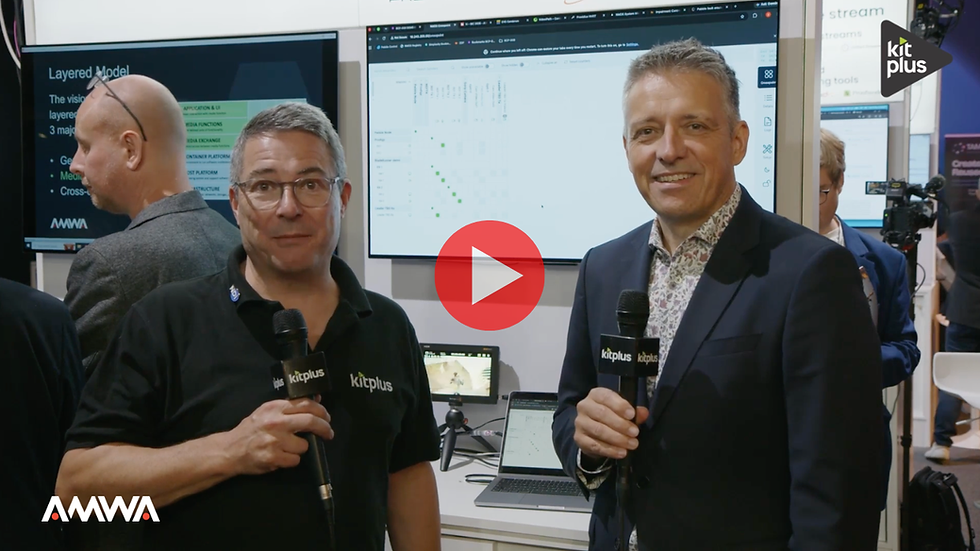
Willem Vermost from the European Broadcasting Union (EBU) and Pedro Ferreira from Bisect will walk you through how DMF concepts can translate into real-world broadcast workflows and how you can get started today.
Watch the full webinar: Stepping Toward DMF: From Today’s Infrastructure to Dynamic Workflows
During the webinar, Willem asked Pedro this question: How do these containers talk to each other? We've heard the magical words Media Exchange Layer (MXL), so what is the link between the container or the media function and MXL?
Pedro responded by talking about 3 orthogonal planes: the data plane, which is MXL, the control plane, and the orchestration plane. To find out more about what these 3 planes are comprised of and what the vision for them is, take a look at the webinar recording.
Watch to also find out:
How your workflows can be made more efficient with DMF without abandoning your SDI and ST 2110 infrastructure
How DMF changes the way you think about compute, networking, and media resources – and how those resources can be shared and allocated dynamically
What a DMF workflow could look like in practice, from spinning up the media functions you need to releasing resources when the work is done
Where MXL fits within the EBU’s DMF reference architecture and how it relates to ST 2110
What you should be thinking about now as the industry moves toward more dynamic, software-defined facilities
After you watch, if you want more information about JT-DMF or you’re ready to become a DMF supporter, visit amwa.tv/jtdmf.